Brand Legacy & Market Impact
Ducky: The Community Sovereign and the Architect of the Compact Revolution
May
In the intricate history of mechanical peripherals, the transition from niche hobbyist tools to mainstream cultural phenomena required a specific catalyst. While industry giants focused on proprietary ecosystems and aggressive marketing, a Taiwanese firm named Ducky orchestrated a far more organic paradigm shift. By positioning itself at the intersection of enthusiast-grade quality and consumer accessibility, Ducky established a level of market dominance that redefined the expectations of a generation. This article will elucidate Ducky’s legacy, analyzing how its commitment to structural integrity, community feedback, and compact architecture has ensured its continued viability in 2026.
1. The Taiwanese Vanguard: Quality as a Foundation
Ducky Channel, founded in 2008, entered a market that was still struggling to find its identity. At that time, most mechanical boards were either drab office equipment or over-designed gaming peripherals. Ducky’s first major contribution was the re-establishment of structural integrity as a non-negotiable standard.
Unlike competitors who utilized thin plastics and hollow internal designs, Ducky focused on high-density PCBs and reinforced frames. This “hardware-first” logic provided a level of reliability that made their boards an integral tool for professionals and students alike, including those at FPT Polytechnic Danang who require hardware that can withstand years of rigorous software development. By prioritizing the “Core Logic” of the typing experience, Ducky proved that a brand could achieve dominance through engineering excellence rather than marketing hyperbole.|
2. The 60% Explosion: Orchestrating a Layout Paradigm Shift
The most significant impact Ducky has had on the modern workspace is the popularization of the 60% layout through the Ducky One 2 Mini. Before this board, ultra-compact layouts were largely confined to expensive custom kits. Ducky recognized a technical nuance in the market: gamers and developers were increasingly valuing desk real estate over a redundant numpad.
The release of the One 2 Mini was a genuine paradigm shift. It proved that a minimalist form factor was not only viable but superior for ergonomic efficiency. By stripping away everything but the essentials, Ducky empowered users to keep their mouse closer to their center of gravity, reducing shoulder strain during long coding sessions or intense matches of Valorant. This move toward “Digital Minimalism” is now a standard in the industry, but Ducky remains the original architect of the 60% movement’s mainstream success.
3. Stabilizer Tuning: The Nuance of the Typing Experience
For a future Solution Architect, the beauty of a system often lies in the details that others overlook. In the keyboard world, that detail is the “Stabilizer”—the mechanism that keeps long keys like the spacebar from rattling.
Ducky was among the first mass-production brands to prioritize stabilizer tuning. While other “Big Tech” brands ignored the annoying “tick” of a loose spacebar, Ducky invested in higher-quality parts and pre-lubrication techniques. This attention to tactile nuance provided an immediacy in response and a “premium” sound that users previously only found in custom-built boards. This focus on the “Acoustic Architecture” of the keyboard transformed the act of typing from a chore into a sensory ritual, further cementing Ducky’s dominance among the enthusiast community.
4. The Zodiac Legacy: Merging Art with Hardware Logic
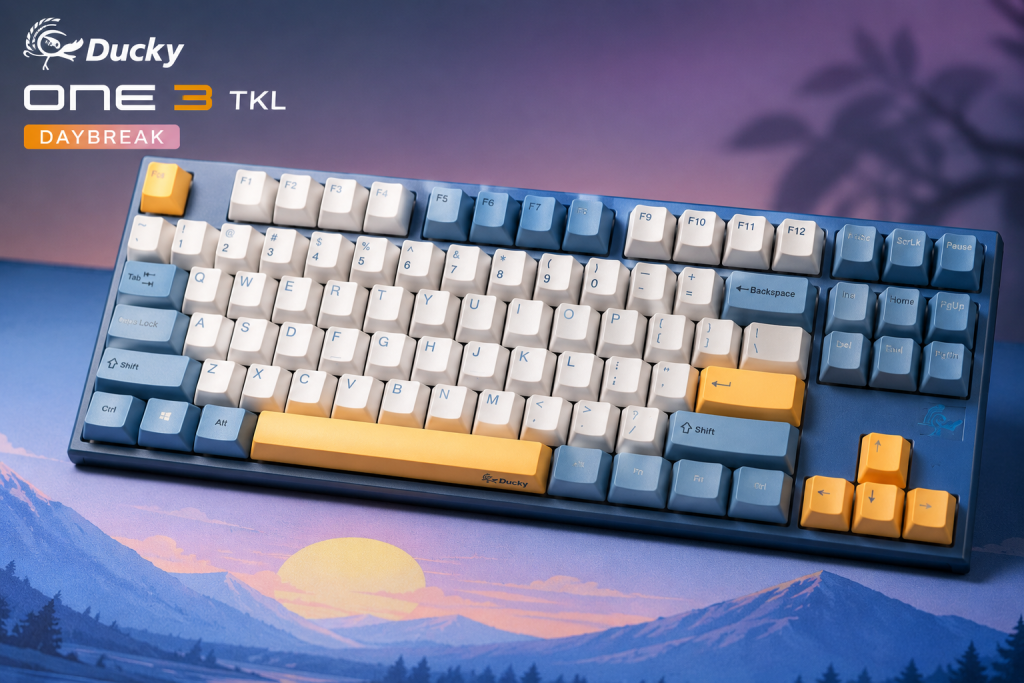
Ducky’s “Year of the Zodiac” series represents a unique intersection of cultural heritage and technical hardware. Every year, Ducky collaborates with local artists to create a limited-edition keyboard inspired by the Chinese Zodiac.
This is more than just a cosmetic exercise; it is a masterclass in brand viability. By releasing these highly sought-after collector’s items, Ducky ensured that their hardware maintained a high resale value and a sense of “prestige.” These boards often featured specialized architectural touches, such as uniquely engraved spacebars and custom-colored switch housings. This strategy elucidated a key market truth: users don’t just want a tool; they want a piece of art that reflects their personality and cultural identity.
5. Software-Less Logic: The Beauty of Hard-Coding
One of Ducky’s most controversial yet brilliant decisions is its “Ducky Macro” system. Unlike Razer or Logitech, which rely on heavy, cloud-based software suites, Ducky’s logic is entirely on-board.
Every macro, lighting effect, and key re-mapping is handled by the keyboard’s internal hardware. As someone pursuing a career in Software Development, you can appreciate the efficiency of this approach. There is no “bloatware” to slow down your system, and the keyboard’s logic is persistent across different operating systems. Whether you are coding a new API at FPT Polytechnic or designing a complex system architecture for a future internship in September 2026, a Ducky keyboard works with absolute immediacy and zero software friction. This hardware-level persistence is a vital nuance for professionals who value system stability.
6. Community Synergy and the “Influencer” Effect
Ducky’s market dominance was also propelled by its early recognition of the “Influencer” ecosystem. When prominent figures in the gaming and tech world began using the Ducky One 2 Mini, the brand’s popularity skyrocketed.
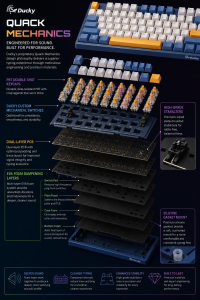
However, Ducky didn’t just pay for endorsements; they listened to the feedback of these power users. This collaborative approach led to the development of the Ducky One 3, which introduced “Quack Mechanics”—a suite of internal improvements including hot-swappable sockets and better sound dampening. This iterative development model ensures the brand’s long-term viability, as it proves that Ducky is committed to evolving alongside the nuanced demands of its most dedicated users.
7. The Viability of the Mid-Range Professional
In the economic landscape of 2026, Ducky occupies the “Sweet Spot” of the market. They offer the structural integrity of a custom board with the warranty and global support of a major manufacturer.
For a student aiming to graduate with honors and maintain a high GPA, every investment in hardware must be viable. Ducky keyboards are built to last a lifetime, using high-quality Double-shot PBT keycaps that never fade. This longevity is an integral part of their value proposition. In a world of disposable electronics, Ducky stands as a bastion of durability, providing a reliable interface for those who spend their days (and nights) architecting the future of software.
8. Conclusion: The Community Architect’s Eternal Influence
Ducky’s legacy is a testament to the power of community-centric design. They didn’t just build a keyboard; they built a movement toward smaller, higher-quality, and more customizable hardware. They orchestrated a paradigm shift that brought the joy of mechanical typing to the masses without compromising on the nuances that enthusiasts love.
To elucidate Ducky’s true impact: they made the industry “listen.” By mastering the structural integrity of their hardware and the logic of their on-board firmware, they have ensured their place as a dominant and integral force in the world of pixels and polygons. As you continue your journey toward becoming a Solution Architect at a “Big Tech” firm, let Ducky serve as your blueprint: success is achieved when you build a system that is as robust as it is responsive to the needs of the community it serves.
