
Post
The 40% Keyboard Lifestyle: Minimalist Masochism or Peak Typographic Efficiency?
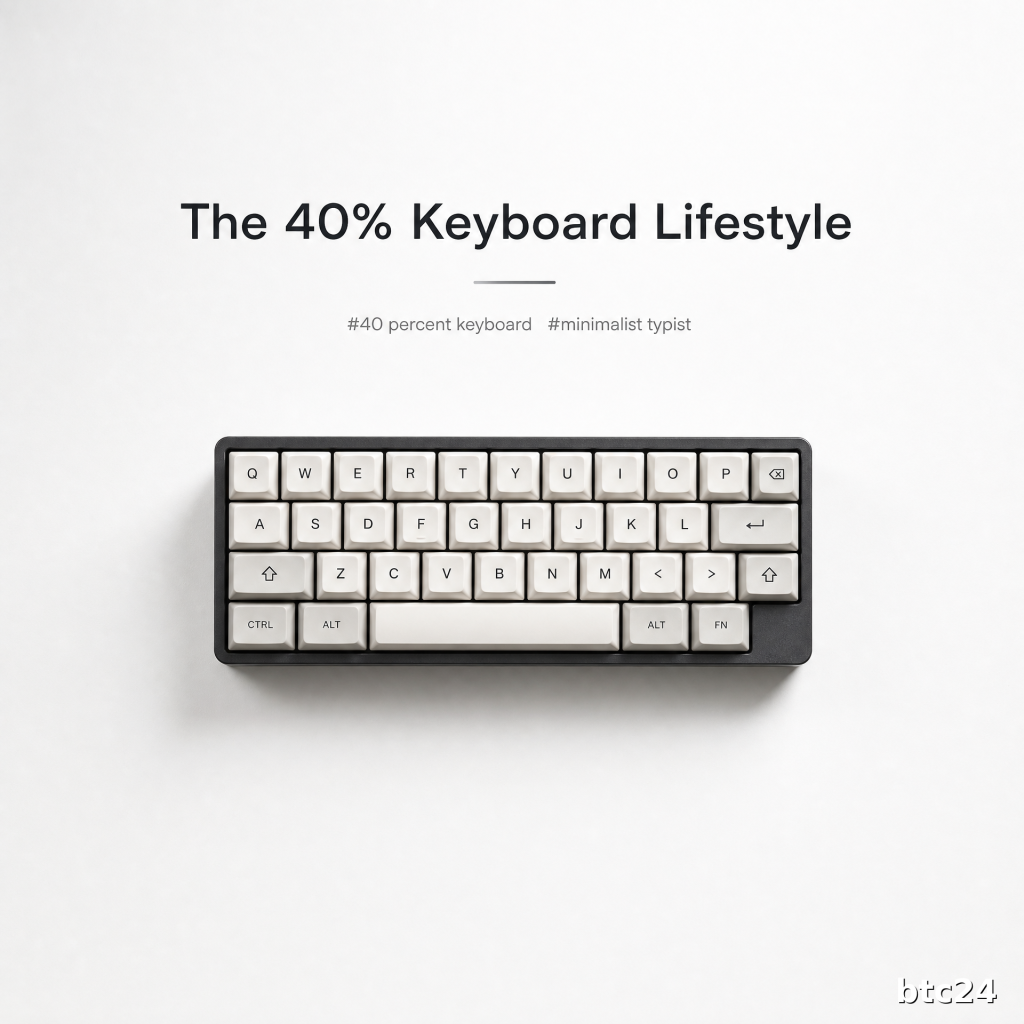
Jun
1. Introduction to the Paradigm Shift: The 40% Keyboard Lifestyle: Minimalist Masochism or Peak Typographic Efficiency?
The global landscape of premium computer peripherals has undergone a staggering renaissance over the past decade. What was once universally considered a mere input device—a humble, plastic tool used simply to communicate with a machine—has dramatically evolved into a highly personalized statement of aesthetic preference, mechanical mastery, and acoustic engineering. At the absolute forefront of this relentless technological and cultural shift is the ongoing, highly nuanced discourse surrounding The 40% Keyboard Lifestyle: Minimalist Masochism or Peak Typographic Efficiency?. When we discuss the 40% Mechanical Keyboard, we are not merely talking about molded plastics and electronic circuits; we are deeply analyzing the complex intersection of human biomechanics, advanced acoustic engineering, and material science. Enthusiasts, developers, and professional competitive gamers alike are constantly seeking the theoretically perfect balance between absolute tactile satisfaction and uncompromising digital efficiency. This relentless pursuit of mechanical perfection has led to an explosion in aftermarket modifications, specialized niche manufacturing, and a community-driven standard of quality that completely rivals traditional, multi-billion-dollar consumer electronics. By diving deep into the microscopic details of the 40% Mechanical Keyboard, we uncover the hidden structural complexities that dictate exactly how we interact with the digital world on a daily basis.
To truly understand the profound magnitude of this hardware evolution, one must consider the sheer, overwhelming volume of physical inputs the average power user or competitive esports athlete executes annually. We are talking about millions of individual interactions, with each single keystroke requiring a highly specific actuation force, a precise bottom-out distance, and an optimized rebound speed. The rigorous implementation of the 40% Mechanical Keyboard directly addresses these micro-interactions by fundamentally altering the underlying physics of the keystroke event. It represents a deliberate, calculated architectural decision to forcefully move away from mass-produced, lowest-common-denominator membrane hardware and towards bespoke, intentionally crafted sensory experiences. The modern power user absolutely refuses to accept generic hardware, demanding instead a hyper-tailored interface that flawlessly respects their ergonomic needs, acoustic preferences, and performance requirements. Throughout this comprehensive, deep-dive guide, we will dissect every single technical nuance of the The 40% Keyboard Lifestyle: Minimalist Masochism or Peak Typographic Efficiency?, providing you with an absolute masterclass in modern hardware optimization and peripheral mastery.
2. Historical Context and the Evolution of the Hardware Landscape
The impressive lineage of modern enthusiast peripherals can be directly traced back to the golden era of computing in the 1980s and 1990s—an epoch deeply defined by uncompromising, tank-like build quality and robust, function-first industrial design. However, as personal computers became widely ubiquitous in the early 2000s, the global tech industry aggressively pivoted towards extreme cost-cutting measures, resulting in decades of mushy, uninspiring membrane keyboards and structurally hollow chassis designs. The current, massive resurgence of interest in highly specialized concepts like the 40% Mechanical Keyboard was born entirely out of a collective, global rebellion against this accepted mediocrity. Early pioneers in the mechanical keyboard and peripheral community began salvaging vintage terminal components, meticulously modifying server-grade equipment, and eventually designing their own printed circuit boards (PCBs) and mounting systems to escape the harsh limitations of off-the-shelf, mainstream gaming brands. This brilliant grassroots movement laid the absolute foundation for the incredibly diverse, highly technical hardware ecosystem we passionately enjoy today.
Understanding the deep historical context surrounding the 40% Mechanical Keyboard is vitally important because it explains exactly why certain highly specific engineering choices were originally made. Many of the industry standards we take for granted today—from specific mechanical switch footprints to precise PCB routing angles—are direct descendants of decisions made by early industrial designers testing the absolute limits of material science and USB protocols. As the community rapidly grew, it successfully transitioned from a niche, underground hobby on obscure internet forums to a multimillion-dollar, highly competitive global industry. Mainstream, tier-one manufacturers finally began to take notice, actively adopting community-created innovations like hot-swappable sockets, advanced dampening foams, and sophisticated mounting architectures. The overarching narrative of the The 40% Keyboard Lifestyle: Minimalist Masochism or Peak Typographic Efficiency? is fundamentally a story of profound democratization, where the incredibly demanding standards of a few passionate individuals managed to permanently elevate the baseline manufacturing quality for millions of consumers worldwide.

3. Technical Deep Dive: The Underlying Architecture of 40% Mechanical Keyboard
Moving beyond the fascinating history, let us rigorously examine the raw, uncompromising technical architecture that makes the 40% Mechanical Keyboard so incredibly compelling to hardware enthusiasts. At its very core, the final performance of any premium peripheral is entirely dictated by the quality and implementation of its lowest-level components. We must critically analyze the structural integrity of the chassis, the electronic pathways of the PCB, and the microscopic mechanical tolerances involved in the switch or mounting assembly. When successfully implementing the complex principles of the 40% Mechanical Keyboard, engineers and modders must carefully consider the friction coefficients between moving plastic parts, the specific resonance frequencies of the metallic or polymeric enclosure materials, and the digital input latency of the scanning matrix. Every single millimeter of switch travel, every gram of bottom-out force, and every millisecond of debounce delay is meticulously calculated to deliver a highly specific, repeatable feedback loop directly to the user’s nervous system. It is nothing short of a breathtaking masterclass in micro-engineering.
Consider the deeply complex, often unpredictable interplay between the internal components when the 40% Mechanical Keyboard is fully realized in a custom build. A premium keyboard PCB must be designed not only for rapid, ghost-free electrical routing but also to minimize severe signal interference and accommodate calculated flex cuts. The specific mounting style heavily influences exactly how kinetic energy from your fingers is dispersed through the rigid chassis, while the switch housings and stems must be manufactured with incredibly tight, micron-level tolerances to minimize severe tracking deviation and physical stem wobble. This level of extreme technical scrutiny is exactly what separates a generic, store-bought peripheral from a true, end-game custom build. By mastering the low-level mechanics of the The 40% Keyboard Lifestyle: Minimalist Masochism or Peak Typographic Efficiency?, users gain the unprecedented, empowering ability to completely refactor their hardware experience, tuning their gear much like a professional motorsport mechanic finely tunes a high-performance racing engine before a world championship race.
4. Acoustic Refactoring: Engineering the Sonic Identity
One absolutely cannot discuss premium keyboards and peripherals in the modern era without dedicating massive attention to acoustics. The distinct sound signature of a keyboard—often described using highly subjective, community-specific vernacular like “thock,” “clack,” “marbly,” or “creamy”—is a direct, undeniable byproduct of the complex concepts surrounding the 40% Mechanical Keyboard. Sound is essentially kinetic energy traveling violently through various physical mediums, and every single component in a keyboard acts as either an acoustic resonator, a frequency dampener, or a sonic amplifier. The material density of the aluminum or polycarbonate case, the specific acoustic properties of the mounting plate, the internal thickness of the plastic keycaps, and the precise lubrication state of the mechanical switches all combine to create a highly complex, completely unique sonic profile. When optimizing specifically for the The 40% Keyboard Lifestyle: Minimalist Masochism or Peak Typographic Efficiency?, the ultimate goal is often to successfully isolate and amplify highly desirable sound frequencies while aggressively eliminating harsh metallic pings, annoying case hollowness, and frustrating stabilizer wire rattle.
To achieve this highly sought-after acoustic nirvana, enthusiasts employ a staggeringly wide variety of strategic, often experimental modification techniques. Precision-cut poron switch pads, heavy silicone dampeners, specialized PTFE switch films, and medical-grade lubricants are frequently used to fill empty acoustic cavities and significantly tighten loose manufacturing tolerances. The precise application of the 40% Mechanical Keyboard directly influences exactly how these sound waves propagate through the board. For instance, a significantly denser internal brass weight will naturally absorb higher-frequency vibrations, resulting in a much deeper, more muted acoustic profile, while a highly tensioned, unlubricated switch will provide an aggressively sharp, high-pitched clack. Mastering the acoustic architecture of a peripheral is an incredibly delicate balancing act; too much heavy dampening can easily result in a lifeless, muddy feeling, while too little can leave the board sounding incredibly cheap and piercing. The true, elusive art lies in finding the exact intersection of material harmony.
5. Ergonomics, Biomechanics, and Sustained High Performance
Moving far beyond mere aesthetics and acoustics, the immense physical toll of constant, daily digital interaction is a paramount, unavoidable concern for modern professionals, developers, and esports athletes. The 40% Mechanical Keyboard plays a highly critical, often underappreciated role in actively addressing the harsh biomechanical reality of interfacing with a computer for 8 to 12 grueling hours a day. Human hands, wrists, and delicate forearms were simply not evolutionarily designed to execute rapid, repetitive micro-movements on flat, rigid geometric planes for extended periods. This biological mismatch frequently leads to severe muscular fatigue, debilitating repetitive strain injuries (RSI), and severe long-term joint degradation. By thoughtfully integrating the advanced principles of the The 40% Keyboard Lifestyle: Minimalist Masochism or Peak Typographic Efficiency?, users can significantly alter the ergonomics of their workspace. Crucial factors such as precise typing angles, device weight, keycap shape contouring, and the specific actuation force required directly impact the immense amount of stress placed on the intricate tendons and ligaments of the human hand.
The relentless pursuit of ergonomic excellence requires a holistic, deeply scientific approach. It is definitely not simply about adopting split keyboard layouts or aggressively contoured chassis shells; it is about significantly reducing the total cumulative physical impact of every single click and keystroke over a lifetime. When a peripheral is perfectly optimized through the precise lens of the 40% Mechanical Keyboard, the user immediately experiences a massive reduction in harsh bottom-out shock and muscular resistance, allowing the fingers to glide smoothly and actuate with absolutely minimal physical effort. This immediate physical relief directly translates to dramatically increased sustained performance, higher WPM accuracy metrics in competitive environments, and a massive, life-changing reduction in end-of-day physical fatigue. Investing serious time into understanding this vital biomechanical relationship is perhaps the single most important aspect of the hardware hobby, as it directly safeguards the user’s long-term physical health and professional longevity.
6. The Global Modding Ecosystem and Enthusiast Innovations
The true, enduring brilliance of the modern hardware landscape lies firmly in its heavily open-source, passionately community-driven nature. The groundbreaking concepts defining the The 40% Keyboard Lifestyle: Minimalist Masochism or Peak Typographic Efficiency? are constantly being iterated upon by a massive, global network of amateur tinkerers, brilliant industrial designers, and highly skilled software engineers. This thriving, deeply interconnected modding ecosystem means that no device is ever truly “finished” upon leaving the assembly factory. An educated user can completely transform the entire character of their peripheral over a single weekend by carefully applying new lubrication techniques, swapping out internal dampening materials, changing out microswitches, or flashing custom, open-source firmware like QMK or VIA. The 40% Mechanical Keyboard is essentially a beautiful blank canvas for infinite personal expression and highly technical optimization. This powerful culture of relentless modification has forced stubborn mainstream manufacturers to finally adapt, shifting rapidly away from proprietary, locked-down designs and aggressively moving towards modular architectures that openly encourage and facilitate user intervention.
We see this incredible, decentralized innovation manifested daily in the countless community group buys, independent bespoke design studios, and specialized online storefronts completely dedicated to niche hardware components. Whether it is a highly specific, gold-plated spring weight, a uniquely formulated, aerospace-grade dielectric grease, or a custom-milled, heavy-machined aluminum chassis, the vast resources currently available to deeply explore the 40% Mechanical Keyboard are nothing short of staggering. This absolute democratization of hardware engineering empowers average, everyday consumers to achieve build qualities and extreme performance metrics that were once reserved strictly for high-end military, aerospace, or medical equipment. By actively participating in this vibrant ecosystem, users not only drastically improve their own physical hardware but also contribute significantly to a vast, collective knowledge base that continuously pushes the boundaries of what is mechanically and electronically possible.
7. Comparative Analysis and Disruptive Global Market Impact
To fully contextualize the immense, undeniable value of the The 40% Keyboard Lifestyle: Minimalist Masochism or Peak Typographic Efficiency?, we must place it in direct, unflinching comparison with competing design philosophies and legacy mass-market alternatives. How exactly does a custom system meticulously optimized for the 40% Mechanical Keyboard stack up against traditional, off-the-shelf consumer peripherals found in big-box stores? The difference is frequently, and accurately, described as night and day. While mainstream hardware often prioritizes flashy RGB lighting algorithms, cheap plastic molds, and aggressive, superficial marketing jargon, enthusiast-grade devices prioritize absolute structural integrity, flawless tracking precision, and acoustic purity. When directly comparing the two paradigms side-by-side, the generic device will almost always exhibit severe physical rattle, a hollow, cheap resonance, and incredibly inconsistent actuation feel. In stark contrast, the fully optimized device delivers a rock-solid, incredibly cohesive, and deeply satisfying tactile event with every single interaction.
The overall market impact of this glaring, massive disparity is undeniable and highly disruptive to the traditional tech industry. Modern consumers are becoming increasingly educated about true hardware quality, leading to a massive, global surge in unprecedented demand for premium, highly specific components. The advanced, nuanced concepts surrounding the 40% Mechanical Keyboard are no longer hidden industry secrets discussed exclusively on obscure Reddit threads or Discord servers; they are now front-and-center selling points for the biggest tech brands in the world. This dramatic shift in consumer expectation has forced the entire industry to drastically elevate its baseline manufacturing standards. We are currently witnessing the rapid death of the cheap, throwaway peripheral as even budget-conscious buyers begin to demand the extreme durability, flawless feel, and deep customization options historically provided only by genuine, high-end architectures. The The 40% Keyboard Lifestyle: Minimalist Masochism or Peak Typographic Efficiency? is definitely not just a fleeting trend; it represents the permanent new baseline for all future human-computer interaction.
8. Strategic Maintenance and Absolute Hardware Longevity
A premium peripheral meticulously engineered around the strict principles of the 40% Mechanical Keyboard represents a highly significant financial and temporal investment. Therefore, implementing a strict, deeply strategic maintenance protocol is absolutely essential to preserve its elite performance metrics and stunning aesthetic value over the course of time. Unlike cheap disposable electronics, these high-end, custom devices are explicitly designed to last for decades if properly cared for. The absolute enemy of mechanical switches, high-end optical sensors, and custom PCBs is the gradual accumulation of household dust, skin oils, and microscopic environmental debris. When left unchecked, this abrasive particulate matter can easily infiltrate the delicate housings, drastically altering the carefully calculated friction coefficients and completely ruining the meticulously tuned, smooth actuation that the The 40% Keyboard Lifestyle: Minimalist Masochism or Peak Typographic Efficiency? is specifically designed to provide. Regular, rigorous preventative maintenance is the only guaranteed way to ensure absolute hardware persistence.
A truly comprehensive maintenance routine involves significantly more than just occasionally wiping down the exterior plastic surfaces with a damp cloth. It requires safely disassembling the device to vacuum the internal plates, using high-percentage isopropyl alcohol to meticulously clean the delicate PCB contacts, and occasionally re-lubricating specific friction points if microscopic wear begins to predictably develop. For hot-swappable boards or modular devices utilizing the 40% Mechanical Keyboard, it may also involve carefully reseating components to ensure absolutely perfect electrical pin contact. By actively adopting a serious mindset of hardware stewardship, users ensure that their peripheral remains a pristine, ultra-high-performance tool rather than a slowly degrading piece of plastic. The dedicated time spent maintaining the device is a direct, highly rewarding investment in the ongoing, uncompromising quality of your daily digital experience.
9. The Final Verdict: Mastering the Digital Interface
In conclusion, the sophisticated discourse surrounding the The 40% Keyboard Lifestyle: Minimalist Masochism or Peak Typographic Efficiency? represents the absolute zenith of modern peripheral customization and acoustic engineering. By firmly rejecting the era of generic, mass-produced computer accessories, we collectively embrace a vastly superior philosophy of intentional, bespoke mechanical design. The 40% Mechanical Keyboard actively forces us to critically analyze the physical connection between human intention and digital execution, painstakingly optimizing every conceivable variable for acoustics, biomechanics, speed, and absolute structural integrity. Whether you are a professional software engineer typing thousands of lines of code daily, a highly competitive esports athlete demanding zero-latency actuation to secure a championship, or simply a dedicated, obsessive enthusiast chasing the theoretically perfect sound signature, mastering these low-level hardware concepts is the ultimate key to unlocking your full potential.
Do not settle for a subpar typing or tracking experience that actively degrades your physical health and diminishes your daily productivity. The advanced tools, premium materials, and vast knowledge required to build your absolutely perfect peripheral are readily available, fully supported by a thriving, highly passionate global community of innovators. Embrace the immense technical depth of the 40% Mechanical Keyboard, boldly experiment with different esoteric materials, niche switches, and complex aftermarket modifications, and permanently transform your workspace into a true, uncompromised sanctuary of high performance. The ultimate keyboard is not something you simply buy off a retail shelf; it is an architectural masterpiece that you personally curate, refine, and perfect over time. Welcome to the final, incredibly rewarding frontier of the elite enthusiast hardware experience.
