In the sophisticated world of enterprise software, the transition from “Deployment” to “Maintenance” is where the true value of a Solution Architect is revealed. A system that lacks a rigorous audit protocol is a system destined for catastrophic failure. Translating this logic to the physical realm, your mechanical keyboard is a high-performance infrastructure that requires […]
In the hierarchical structure of computer technology, there exists a profound divide between those who consume interfaces and those who construct them. For a Solution Architect or a software engineer, mastering the architectural layers of a system is integral to long-term success. While “Hot-swap” technology has lowered the barrier to entry, the art of soldering […]
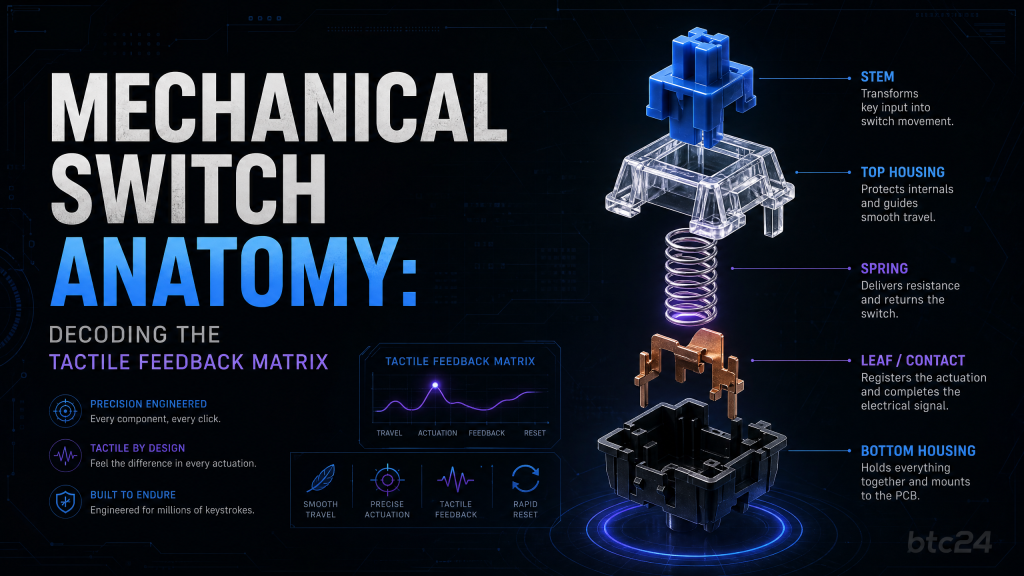
In the complex ecosystem of mechanical switch components, the spring is often the most undervalued element. While the housing and stem dictate the sound and smoothness, the spring is the sole component responsible for the kinetic energy and resistance of the typing experience. For a Solution Architect or a software engineer, the spring acts as […]
In the high-stakes environment of software development and systems engineering, we often obsess over the architectural integrity of our code and the immediacy of our hardware’s response. However, a seasoned Solution Architect recognizes that the most critical system failure does not occur in the cloud or on the PCB—it occurs in the physical body of […]
In the precise world of hardware engineering, the difference between a “good” component and a “masterpiece” often lies in the tolerances—the allowable limits of variation in physical dimensions. In the mechanical keyboard ecosystem, even the most reputable switches can suffer from “Housing Wobble,” a subtle instability where the top and bottom halves of the switch […]
In the broader context of system design, “debugging” is a term usually reserved for the high-level world of software and algorithms. However, for those who seek to master the entire technical ecosystem, debugging must extend into the physical layer. The Printed Circuit Board (PCB) of a mechanical keyboard acts as the “Kernel” of the device—the […]
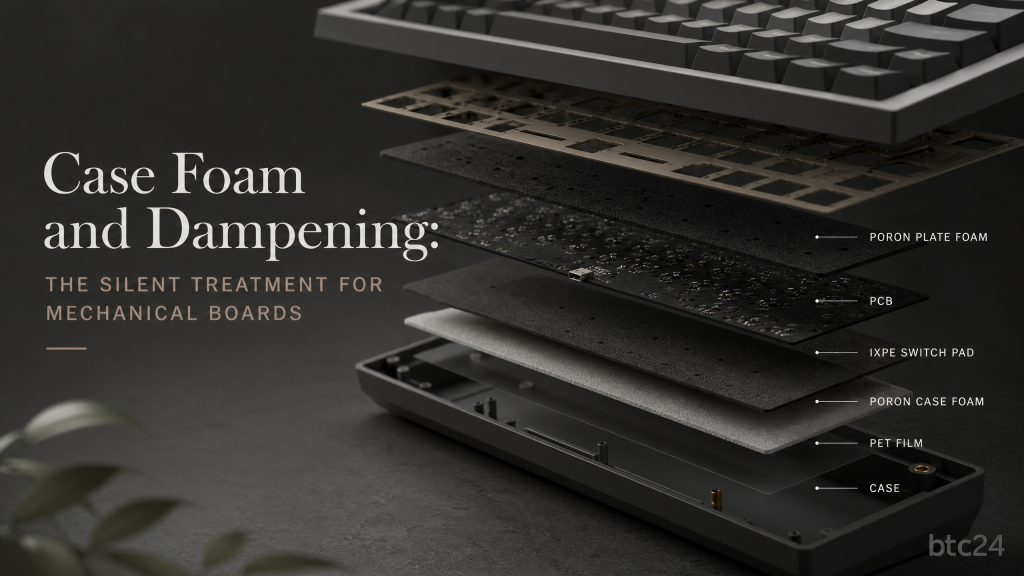
In the specialized field of hardware optimization, the tactile experience is only one half of the equation. The other, often more elusive half, is the acoustic profile. A mechanical keyboard is essentially a resonance chamber; every keystroke triggers a series of vibrations that propagate through the PCB, the plate, and the chassis. Without intentional architectural […]
In the sophisticated architecture of a mechanical keyboard, the primary switches often receive the majority of technical attention. However, a seasoned Solution Architect knows that a system is only as strong as its most vulnerable component. In this ecosystem, the “Stabilizers” act as the critical infrastructure supporting large keys such as the Spacebar, Shift, and […]
In the rigorous discipline of system design, engineers constantly seek to eliminate “noise”—any inefficient friction that degrades the overall performance of a system. When translating this concept to the physical realm of computer peripherals, the mechanical switch is the primary node of interaction. Out of the factory, even the most premium switches suffer from micro-abrasions […]
Preventive In the disciplined world of software development, professionals often grapple with the concept of “Technical Debt”—the cumulative cost of choosing a convenient, suboptimal path today instead of a robust solution. In the realm of hardware, neglecting maintenance is the ultimate form of technical debt. For an aspiring Solution Architect, a keyboard is far […]